Admin and organizer workflows
Event creation, approval and administrative review are listed as core workflows. Different roles interact with the same event records in different ways.
Full-stack event management case study with React, Express, Supabase, role-based workflows, registration, QR tickets, lifecycle rules and analytics.
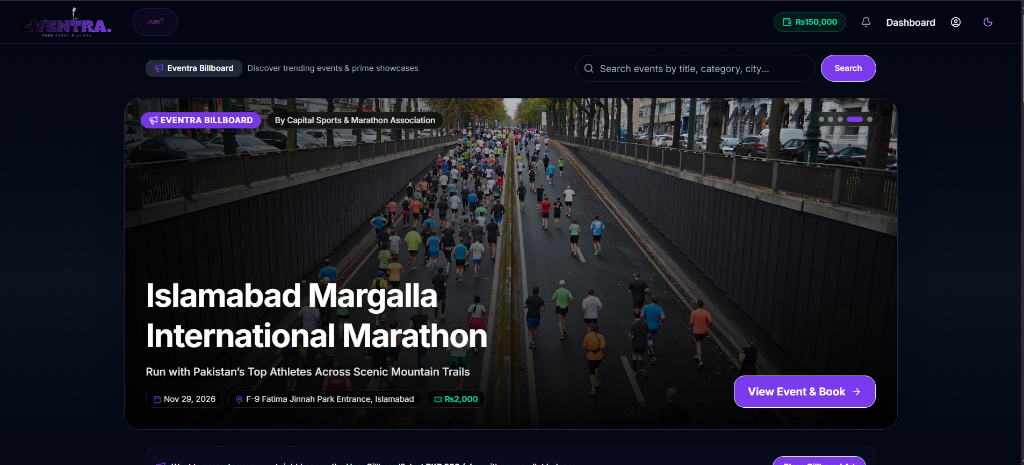
Project image from the Kumail Raza portfolio.
The Event Management System in my portfolio addresses event workflows for three distinct user types: administrators, organizers and attendees. Rather than a simple list of events, the project connects creation, review, registration, ticketing and feedback.
The existing portfolio description records React, Express, Supabase and Tailwind as the stack, with event approval, QR tickets, date-based lifecycle rules, organizer rankings and analytics. This case study explains those documented product decisions without claiming unverified launch or attendance numbers.
Organizers need a way to create and manage events, administrators need governance and approval steps, and attendees need ways to discover, register and participate. Bringing these roles into one platform requires clear access boundaries and predictable event states.
Event information also changes over time: a planned event becomes open for registration and eventually completes. Date-driven lifecycle behaviour is therefore an important part of the application's domain logic.
Event creation, approval and administrative review are listed as core workflows. Different roles interact with the same event records in different ways.
The platform includes attendee registration and QR-based ticket flows as part of the event participation process.
The project documents date-aware event lifecycle handling so the experience can respond to an event's current stage.
Event feedback and organizer ranking features allow the platform to surface information after participation.
The portfolio describes analytics, PKR pricing analysis and data-driven planning features as part of organizer insights.
Admin, organizer and attendee workflows make authorization and clear user interfaces essential.
The recorded stack includes React for the web application and Express for backend services.
The project uses Supabase alongside the application stack for its data-related needs.
The documented date-based event logic ties business behaviour to event status and timing rather than only to interface buttons.
The project demonstrates implementation of an event lifecycle and multi-role application workflow in a portfolio setting. The available record does not include public verification of event attendance, revenue or production user counts.
For broader capabilities, visit full-stack development services.
I'm based in Pakistan and collaborate remotely with clients and agencies internationally. Share your brief, current technology and goals.